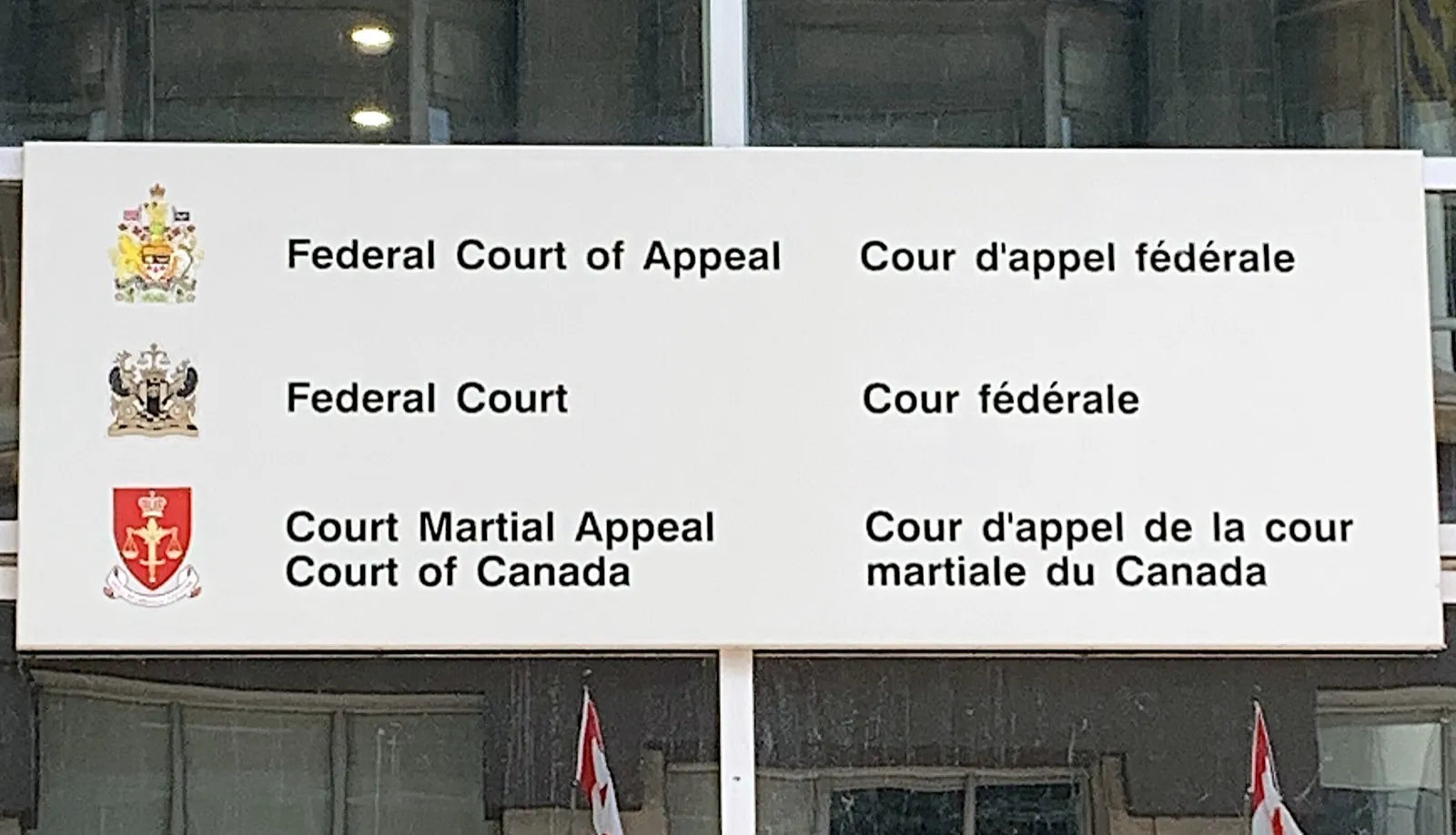
If Immigration, Refugees and Citizenship Canada (IRCC) has refused your visa, study permit, work permit or PR application, judicial review of the IRCC refusal in the Federal Court is the formal way to challenge it. The window is short: 15 days if the decision was made in Canada and 60 days if it was made outside Canada, counted from the day you learned of it. The Court does not hand out visas. It checks whether the officer decided lawfully and fairly, and if not, it can send the file back for a fresh decision. This guide explains the deadlines, each stage, the Federal Court's August 2026 practice guidelines, what it costs, and how to decide between going to court and simply reapplying.
Key Takeaways
- Two stages: you first ask the Federal Court for permission (leave), decided on paper; only if leave is granted is there a hearing.
- Deadline: 15 days for a matter arising in Canada, 60 days for one arising outside Canada, under section 72 of the Immigration and Refugee Protection Act.
- Filing fee: CAD 50. As a rule, neither side pays the other's costs.
- Only a lawyer can appear for you. Immigration consultants cannot represent anyone in the Federal Court.
- Best outcome: the refusal is set aside and a new decision is made. Many cases end earlier, when the Minister agrees to redetermine.
- Since 2 September 2025, study, work and visitor visa cases have a 20-page limit on written argument and a default 45-minute hearing.
How Judicial Review of an IRCC Refusal Works
Section 72 of the Immigration and Refugee Protection Act (IRPA) says that any decision made under the Act can be reviewed by the Federal Court, but only after the Court grants leave. That makes it a two-step process.
Step one is leave. You file an application for leave and for judicial review, then a written record setting out the decision, the reasons, your evidence and your legal argument. The Minister's lawyers (the Department of Justice) reply in writing. A judge then decides, on the papers and without anyone appearing, whether the case deserves a full hearing. There is no appeal from a refusal of leave.
Step two is the hearing. If leave is granted, the judge fixes a hearing date, which under the Act must fall between 30 and 90 days after the leave order, or earlier if both sides agree. The officer's file (the certified tribunal record) is produced, further written submissions may follow, and a judge hears argument.
Two limits matter before you start. First, if the Act gives you a right of appeal, for example to a tribunal, you must use it before going to the Federal Court. Second, the Court is reviewing the officer's decision, not making its own. The grounds it can act on are listed in section 18.1(4) of the Federal Courts Act, and the Court's guidelines ask applicants to tie each ground to the facts of the case. A win means the refusal is set aside and the file goes back for a new decision. It does not mean a visa.
The Deadlines: 15 Days in Canada, 60 Days Outside
The clock starts when you are notified of the decision or otherwise become aware of it. A study permit or visitor visa refused by an IRCC office for someone applying from India is normally a matter arising outside Canada, so the 60-day limit applies. A refusal of an extension or a permit made while you are in Canada usually falls under the 15-day limit. The Court's guidelines ask applicants challenging visa decisions to state which one applies.
| Stage | Who acts | Time limit | Source |
|---|---|---|---|
| File and serve the application for leave (Form IR-1) | Applicant | 15 days (in Canada) or 60 days (outside Canada) from notice of the decision | IRPA s. 72(2)(b) |
| File proof of service | Applicant | 10 days after service | Rule 7 |
| Notice of appearance | Respondent (Minister) | 10 days after service | Rule 8 |
| Applicant's record (perfecting the application) | Applicant | 30 days after filing, or after receiving reasons; a Special Order currently adds 90 days | Rule 10; Guidelines para 4 |
| Respondent's memorandum and any affidavits | Respondent | 30 days after service of the applicant's record | Rule 11 |
| Reply memorandum | Applicant | 10 days after the respondent's memorandum | Rule 13 |
| Leave decision | Judge | No fixed time | Rule 14 |
| Hearing, if leave is granted | Court | 30 to 90 days after leave, unless the parties agree to an earlier date | IRPA s. 74(b) |
If the deadline has already passed, all is not lost, but it gets harder. A judge can extend the time for special reasons, and the request has to be made inside the application for leave itself. It is decided together with leave, so you must explain the whole delay in your first filing. Nothing in section 72 stops the clock while you ask IRCC to reconsider, so do not wait for a reconsideration reply before taking advice.
Missing reasons do not pause the filing deadline
You do not need the officer's full notes to file. If you say in the application that you have not received written reasons, the Registry asks the decision-maker for them, and the decision-maker must send the decision and reasons to the parties. Your 30 days to perfect the application then run from the date you receive them.
From Filing to a Decision, Step by Step
1. The application for leave
The application uses Form IR-1, which since 10 November 2025 is also available as a web-fillable online form. It names the decision and the date you learned of it, the decision-maker and file number, the relief you want, the grounds, the proposed place and language of the hearing, and whether you received written reasons. The respondent is the Minister responsible for the decision. Filing is through the Court's E-Filing portal, which charges no transaction fee, and the filing fee is CAD 50.
2. Perfecting the application
The applicant's record carries the case. In order, it contains the application, the decision, the reasons, any supporting affidavits, a memorandum of argument with concise submissions of fact and law, and a statement of language. Affidavits are limited to evidence the person could give as a witness, and no one can be cross-examined on an affidavit before leave unless a judge orders it.
3. The Minister responds
The Department of Justice files its memorandum within 30 days, and you have 10 days to reply. A judge may also order the decision-maker to produce documents before deciding leave.
4. Leave is granted or refused
If leave is refused, the file closes. If it is granted, the order sets the hearing date and place, the deadline for the certified tribunal record, and dates for any further affidavits and memoranda.
5. Settlement, hearing or written decision
Within 15 days of a leave order, both sides must assess whether the case can settle. If it cannot, the Minister files a Notice of Non-Settlement. Where the case concerns a decision made by or for the Minister and it does settle, the usual result is that the parties agree to have a new decision made and discontinue the court case. Otherwise the case goes to a hearing, or, where both sides are represented by lawyers and agree, to a decision in writing.
6. The judgment
If the Court allows the application, it can send the matter back to be decided again. The judgment can be appealed to the Federal Court of Appeal only if the judge certifies a serious question of general importance, which is rare in individual visa cases.
What the August 2026 Practice Guidelines Change
The Federal Court's Consolidated Practice Guidelines for Citizenship, Immigration and Refugee Protection Proceedings were updated on 12 August 2026. They pull together earlier directions, including the May 2025 notice on the Court's backlog, which reported that immigration leave filings in 2024 were roughly four times the average of the five years before COVID. The points that affect applicants most:
- More time to perfect, but not unlimited. A Special Order gives applicants 90 days beyond the normal 30-day deadline to file their record, without needing the other side's consent. The Court still expects records to be filed on time where possible. Any further extension needs a formal motion and extraordinary circumstances.
- Shorter cases for temporary visas. Since 2 September 2025, judicial reviews of study permit, work permit and temporary resident visa decisions have a 20-page limit on written argument and a default maximum hearing of 45 minutes. Other immigration cases default to 90 minutes.
- Decision in writing. Since 2 September 2025, any immigration judicial review can be decided on the written record if every party has a lawyer, all agree, the documents are available electronically and no one proposes a certified question.
- A built-in settlement check. The 15-day settlement assessment after leave is now standard, which formalises what often happens in practice.
Judicial Review or a Fresh Application: How to Decide
Most refused applicants have two real choices: reapply with a stronger file, or challenge the refusal in court. They solve different problems.
| Situation | Usually better route | Why |
|---|---|---|
| The refusal points to a genuine gap: weak funds, missing documents, unclear study plan | Fresh application | Judicial review looks at the file the officer had. New evidence that fixes the gap belongs in a new application. |
| You submitted the evidence, and the officer's notes ignore or misread it | Judicial review | In our experience, an officer overlooking central evidence is one of the strongest grounds for review. |
| The officer relied on a concern you were never given a chance to answer | Judicial review | Procedural fairness is squarely within the Court's role. |
| The refusal includes a misrepresentation finding | Get legal advice quickly | The consequences go beyond this one application, and reapplying does not remove the finding. |
| You need a decision fast, for an intake or a family event | Usually a fresh application | Even a successful court case ends with a new decision, not a visa, and takes months. |
Some applicants reapply while a judicial review is pending. Discuss with your lawyer how one affects the other before doing both.
Costs and Who Can Represent You
The Court's own fee is CAD 50. Under the Court's immigration rules, no costs are awarded for or against either side unless the Court finds special reasons, so a lost case does not normally leave you paying the government's legal bill. The real cost is a lawyer's fees. These vary widely with the stage and complexity, so ask for a written quote that separates the leave stage from the hearing stage.
On representation, the Federal Court is explicit: consultants and other non-lawyers cannot represent you or give legal advice on your Federal Court case. You can act for yourself, or be represented by a lawyer who is a member of a Canadian law society. Only in rare cases will the Court allow a non-lawyer, such as a family member, to act, and that needs the Court's permission.
Be careful with "guaranteed approval" offers
No one can guarantee leave, a win or a visa. A Federal Court win only sends the file back for a new decision. Treat any promise of a guaranteed outcome, or a request to pay an unlicensed person to "handle the court case", as a warning sign.
For Applicants in India
- Count 60 days from the refusal email or portal message, not from when you start looking for help. Write the date down the day it arrives.
- Keep a complete copy of what you submitted: forms, letters, bank statements, the study plan, employment letters. The Court looks at what the officer had, so this copy is the core of the case.
- Read the reasons, not just the refusal letter. The letter often lists ticked boxes. The officer's notes usually show what was actually weighed, and that is where reviewable errors appear.
- Affidavits must be properly sworn. If you are in India, your lawyer will tell you how and before whom to swear it so the Court accepts it.
- Plan for months, not weeks. If your intake or travel date is close, a fresh application is often the practical route, with judicial review kept for files where the officer clearly went wrong.
For background on the patterns behind common refusals, see our guide to visa rejection reasons and prevention. If your refusal relates to a cancelled document, read our explainer on Bill C-12 and document cancellation.
Our Reading
Judicial review is a narrow tool, and that is its strength and its limit. It works best when the file was strong and the decision was not: the bank statements were there and the officer said funds were not shown, or the job letter was there and the notes say experience was unclear. In those cases the court route can produce a fresh look from a new officer that a reapplication, judged against the same template, might not.
It works poorly when the honest answer is that the application was thin. Spending months and a lawyer's fee to argue about an officer's reasoning on a file that would struggle anyway rarely helps, and a better-prepared application usually does. The 60-day limit for decisions made outside Canada sounds generous, but most of it disappears while people wait for notes or second opinions. Our advice is to get the refusal assessed within the first two weeks, decide on the route, and if it is judicial review, brief a Canadian lawyer while there is still time to do it properly.
Your Action Checklist
Fix the deadline on day one
Note the date you received the decision, and whether it arose in or outside Canada: 15 or 60 days.
Collect the file
Gather the refusal, any officer's notes, and a full copy of everything you submitted.
Get the refusal assessed
Decide whether the problem is the file (reapply) or the decision (judicial review).
If going to court, brief a Canadian lawyer early
Leave enough time for the application, the record and, if needed, properly sworn affidavits.
Refused by IRCC? Get the Refusal Assessed
Send us your refusal and the file you submitted. Our team in Vadodara will tell you whether the problem lies in the application or the decision, and which route fits your timeline.
Refusals and Legal HelpIf a refusal concerns a visitor visa, study permit or work permit, our pages on visitor visas, study visas and work permits set out how we prepare a stronger reapplication.
Frequently Asked Questions
How long do I have to apply for judicial review of an IRCC refusal?
15 days if the matter arose in Canada and 60 days if it arose outside Canada, counted from when you were notified of the decision or became aware of it. A study permit or visitor visa refused for someone applying from India normally falls under the 60-day limit.
Can the Federal Court approve my visa?
No. The Court reviews whether the decision was made lawfully and fairly. If it finds an error, it sets the refusal aside and sends the file back for a new decision, which can still be a refusal.
Can an immigration consultant represent me in the Federal Court?
No. The Federal Court says consultants and other non-lawyers cannot represent you or give legal advice on a Federal Court case. You can act for yourself or use a lawyer who is a member of a Canadian law society.
How much does judicial review cost?
The Federal Court filing fee is CAD 50. As a rule, no costs are awarded for or against either side unless the Court finds special reasons. The main expense is a lawyer's fees, which vary with the stage and complexity of the case.
What happens if leave is refused?
The application for judicial review is dismissed and the file is closed. There is no appeal from a decision on leave. You can still make a fresh application to IRCC.
Can I apply for judicial review after the deadline?
Only with an extension. A judge can allow more time for special reasons. You make the request inside the leave application, explain the whole delay there, and the judge decides it together with leave.
How long does a judicial review take?
There is no fixed time for the leave decision. The filing steps alone run to several months, and if leave is granted, the hearing must be held 30 to 90 days after the leave order unless both sides agree to an earlier date.
Should I reapply or go to the Federal Court?
Reapply if the refusal points to a real gap in your file that new evidence can fix. Consider judicial review if you had already submitted the evidence and the officer overlooked it, or if you were not given a fair chance to answer a concern.
Official sources
This article is based on the Immigration and Refugee Protection Act, sections 72 to 75, the Federal Courts Citizenship, Immigration and Refugee Protection Rules (SOR/93-22), the Federal Court's Consolidated Practice Guidelines for Citizenship, Immigration and Refugee Protection Proceedings (12 August 2026), its practice guide on filing an immigration leave application, its Finding Help page on representation, the E-Filing page, and the Court's notices of 14 May 2025 on the backlog and 5 November 2025 on the online IR-1 form. It is general information, not legal advice.